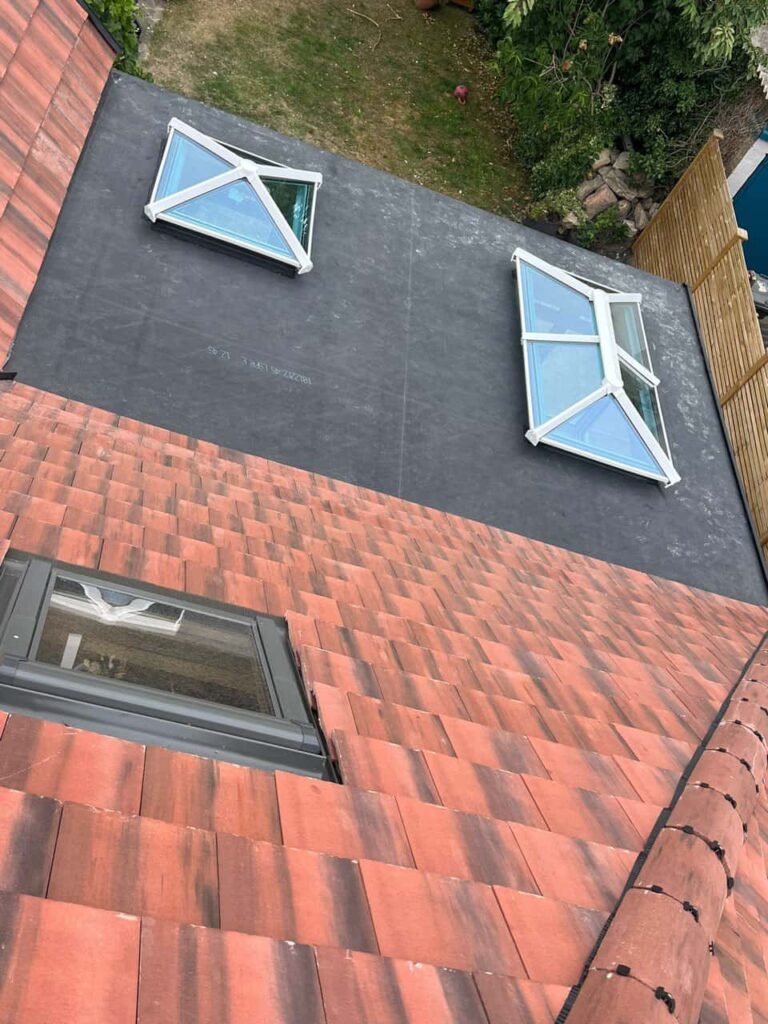
A successful roof repair should do more than make the immediate problem disappear. Whether the issue involves a leak, slipped tiles, damaged flashing or deterioration around a roof junction, the repair should address the underlying cause and restore the affected area so that it performs reliably alongside the rest of the roofing system.
This is why effective roof repair begins with accurate diagnosis. Simply covering a visible defect or replacing the most obvious damaged component may provide temporary improvement, but it will not necessarily prevent the problem from returning.
For property owners in Greenhithe, Kent, Greenhithe Roofing Repairs provides professional roof repairs based on understanding why a defect has developed and what is required to achieve a dependable result.
Long-Term Roof Repair Starts With Finding the Actual Cause
One of the most important aspects of any roof repair is identifying where the problem originates.
This can be more difficult than it appears, particularly with roof leaks. Water entering through one part of the roof may travel beneath the covering before becoming visible inside the property.
The damp patch on a ceiling is therefore not always directly below the external defect.
A thorough assessment may need to consider:
- Tiles or slates
- Lead flashing
- Valleys
- Ridge sections
- Roof junctions
- Areas around chimneys
- Previous repairs
- Roof edges
- Underlying roofing components
Treating the cause rather than simply the symptom is fundamental to long-term performance.
The Repair Needs to Match the Existing Roof
Roofing systems vary considerably.
A repair that is appropriate for one type of roof may not be suitable for another. The existing covering, roof pitch, construction and condition of surrounding materials all influence how repair work should be approached.
Professional repairs should integrate correctly with the existing roof rather than creating an isolated patch that performs differently from everything around it.
This is particularly important where replacement tiles, flashing or other components need to connect with older materials.
Surrounding Areas Need to Be Inspected
The obvious defect should rarely be considered completely in isolation.
If one tile has slipped, for example, it is useful to understand why. An isolated tile may simply require localised attention, but several loose tiles could indicate a wider problem affecting the surrounding area.
Similarly, repairing one section of deteriorated flashing without checking adjoining sections may leave another weakness untreated.
A good roof repair therefore considers both the immediate defect and the condition around it.
Correct Preparation Makes a Significant Difference
Long-lasting roofing work depends heavily on preparation.
Damaged or unsuitable material needs to be dealt with appropriately before the repair is completed. Simply applying new material over a poorly prepared area can conceal the problem rather than resolve it.
The exact preparation required depends on the defect, but the principle remains the same: the repaired section needs a suitable foundation if it is expected to perform properly.
This is one reason professional roofing work involves much more than making a damaged area look satisfactory from ground level.
Quality Materials Need Correct Installation
Good roofing materials are important, but materials alone cannot guarantee a reliable repair.
They need to be appropriate for the roof and installed correctly.
The positioning, fixing and integration of replacement components all influence how effectively the repaired area responds to rain, wind and normal weather exposure.
Long-term performance comes from the combination of suitable materials, appropriate preparation and skilled installation.
Slipped Tile Repairs Should Address Why the Tile Moved
A slipped roof tile is a good example of the difference between a temporary fix and a properly considered repair.
Simply returning a tile to its original position may not address why it moved.
The tile itself may be damaged, its fixing may have deteriorated or there may be an issue affecting the surrounding section.
If tiles repeatedly slip in the same area, the wider roof covering deserves assessment.
A long-term repair should restore the affected section rather than repeatedly correcting the visible symptom.
Roof Leak Repairs Require Careful Investigation
Leaks can be among the most frustrating roofing problems because their source is not always obvious.
Water can enter through damaged coverings, deteriorated flashing, valleys, roof junctions or other vulnerable details.
For a repair to perform over the long term, the route of water ingress needs to be understood.
Simply sealing the area closest to an internal damp mark can fail if the actual entry point is further up the roof.
Professional investigation helps ensure the repair is directed at the genuine weakness.
Lead Flashing Needs Particular Attention
Lead flashing performs an important role around roof junctions and other areas where the main covering meets another structure.
When flashing becomes loose, damaged or deteriorated, water can find a route beneath the surrounding roofing materials.
A suitable repair needs to consider how the flashing interacts with adjoining surfaces. Treating only a small visible gap may not be sufficient if deterioration affects a wider section.
Careful workmanship around these detailed areas contributes significantly to the reliability of the completed roof.
Valleys Must Continue to Manage Water Effectively
Roof valleys can carry substantial amounts of rainwater because they receive water from adjoining roof slopes.
Any repair within or around a valley must therefore allow water to continue flowing correctly.
Problems can arise when the valley itself deteriorates or when surrounding tiles and roofing details no longer provide adequate protection.
Long-term repairs should consider the complete water path rather than simply sealing one visible defect.
Repairs Should Be Able to Withstand Normal Weather Exposure
A roof is constantly exposed to changing conditions.
Rainwater, wind and seasonal temperature changes all place demands on roof coverings and their fixings. A suitable repair therefore needs to become a functional part of the roof rather than acting as a superficial covering over the damaged area.
This is particularly important following wind or storm-related damage.
After poor weather, the most obvious displaced tile may not be the only affected component. Surrounding sections should be inspected for movement or damage that could create problems later.
Previous Repairs Can Provide Useful Clues
When assessing a roof, existing repairs can reveal valuable information.
A roof containing several patched areas may have experienced recurring problems over a long period. This does not automatically mean another repair is unsuitable, but it does make the overall condition increasingly important.
Questions worth considering include:
- Is the new defect connected to a previous repair?
- Are problems occurring in several different areas?
- Is the surrounding roof covering still in satisfactory condition?
- Are repairs becoming increasingly frequent?
- Is deterioration limited or widespread?
The answers help determine whether another localised repair is likely to provide reliable performance.
A Long-Term Repair Should Not Create New Weak Points
Roof repairs need to integrate carefully with the surrounding construction.
Correcting one defect should not interfere with drainage, loosen adjoining materials or create vulnerable transitions between old and new roofing components.
This is particularly relevant around complicated areas such as junctions, valleys, ridges and chimneys.
Experienced roofers consider how the repaired section relates to everything around it rather than concentrating solely on the individual damaged component.
When Is a Localised Repair the Right Solution?
A targeted roof repair can provide excellent long-term performance when the problem is genuinely localised and the surrounding roof remains in serviceable condition.
Examples might include:
- An isolated damaged tile
- A defined section of defective flashing
- Localised storm damage
- A particular leaking junction
- Limited deterioration affecting one roof area
In these circumstances, there may be no reason to carry out unnecessary work elsewhere.
The key is establishing that the defect really is isolated.
When Might Repair No Longer Be Enough?
Even a professionally completed local repair cannot compensate for widespread deterioration across the remainder of the roof.
If new problems continually develop in different areas, the issue may no longer be about improving individual repairs.
Warning signs can include:
- Recurring leaks from different locations
- Numerous slipped or damaged tiles
- Widespread deterioration
- Several previous repair areas
- Multiple roofing components requiring attention
- New problems appearing increasingly often
When these patterns develop, a more comprehensive assessment is needed to establish whether extensive repairs or roof replacement would provide the more appropriate long-term solution.
Avoid Relying on Temporary Repairs for Too Long
Temporary roofing work can be extremely useful when immediate protection is required.
However, a temporary measure is not intended to replace a properly diagnosed and completed repair indefinitely.
If the underlying defect remains, water penetration or material deterioration may eventually return.
Once immediate protection has been achieved, the permanent repair should address what caused the problem in the first place.
Why Professional Workmanship Matters
Roof repair involves understanding how individual roofing components work together.
The quality of the finished repair depends on diagnosis, preparation, material selection and installation.
Experienced roofers can also identify situations where the visible damage is only one part of a wider problem.
This professional judgement is particularly valuable when deciding how much of the surrounding area needs attention and whether repairing it will genuinely provide a dependable outcome.
Professional Roof Repairs in Greenhithe
At Greenhithe Roofing Repairs, we provide professional roofing services throughout Greenhithe, Kent.
Our approach to roof repair focuses on identifying the cause of the problem before determining the appropriate work. Whether the issue involves a leak, slipped tiles, flashing, storm damage or deterioration within another part of the roof, the objective is to provide a repair suited to the condition of the complete roofing system.
Where a targeted repair is appropriate, the work can be focused on the affected area. Where wider deterioration is identified, this can be considered before repeatedly repairing individual symptoms.
Conclusion
A roof repair is suitable for long-term performance when it addresses the underlying cause, uses appropriate materials, is correctly prepared and integrates properly with the surrounding roofing system.
The most important part of the process often happens before the physical repair begins. Identifying why a tile slipped, where water is actually entering or whether deterioration extends beyond the visible defect makes it possible to choose the right solution.
For property owners in Greenhithe, Kent, Greenhithe Roofing Repairs provides professional assessment and roof repair services focused on achieving reliable results. If your roof is leaking, showing signs of damage or has developed a recurring problem, contact our team to arrange an inspection and determine the most appropriate repair.
Call us on: 01322 952 297
Click here to find out more about Greenhithe Roofing Repairs
Click here to complete our contact form and see how we can help with your roofing needs.